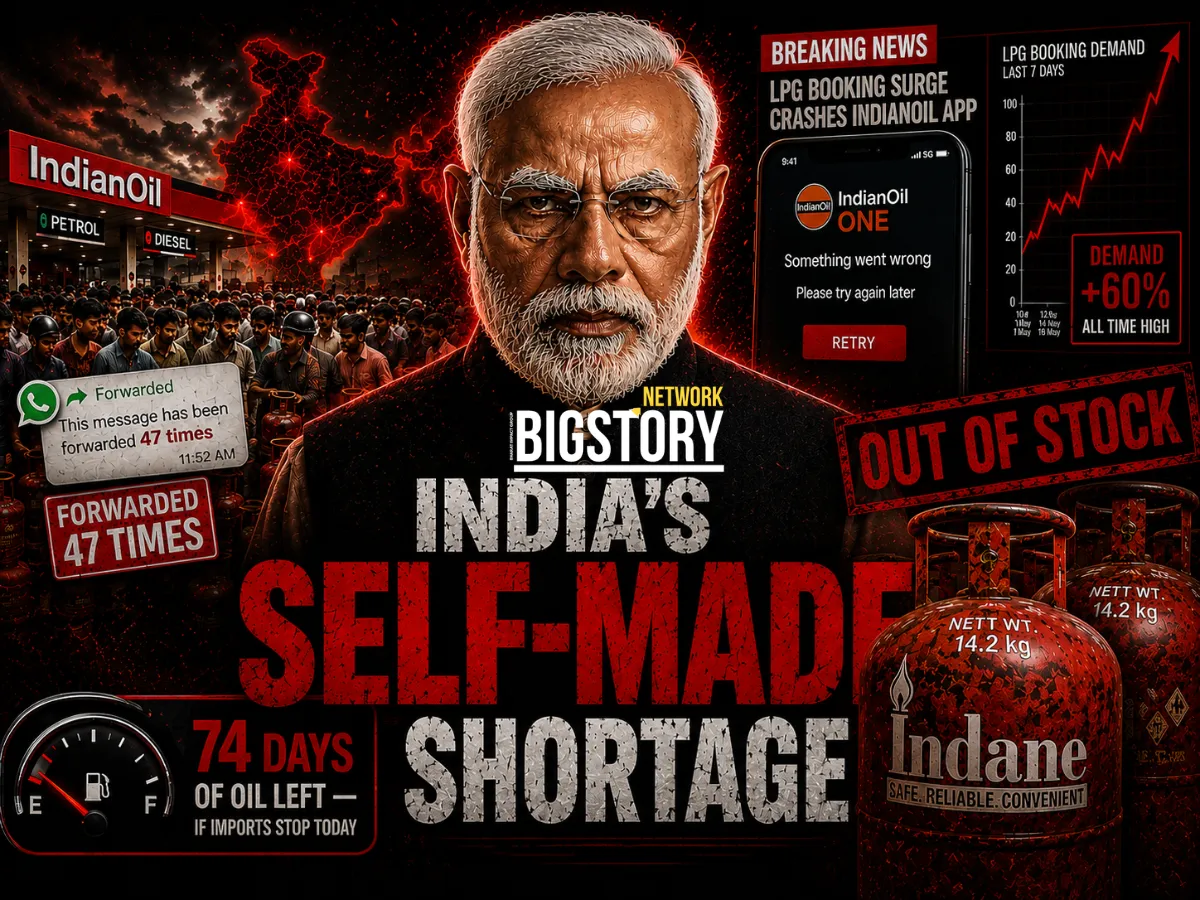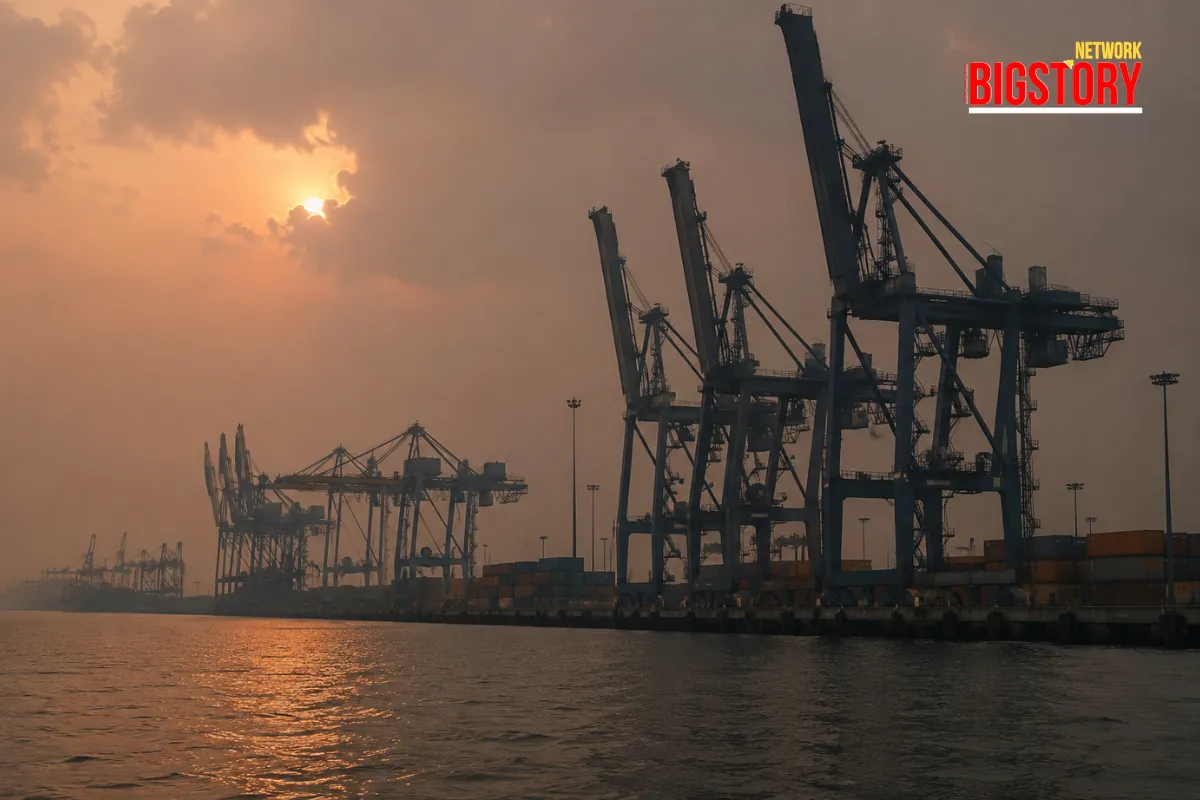
As the US-Iran war shatters global supply chains and triggers severe growth downgrades, incremental policy tweaks are no longer enough to save the domestic economy from a massive balance-of-payments threat.
 Brajesh Mishra
• What happened: A combination of the escalating West Asia crisis, skyrocketing energy import costs, and collapsing domestic human capital pipelines has pushed India to the brink of a structural macroeconomic crisis.
• Why it matters: Global financial bodies, including the UN, have forcefully downgraded India's FY26 growth projections from 7.4% to 6.4%, explicitly citing inflationary shocks and volatile energy markets.
• The strategic play: Economists warn that minor tax exemptions or repo rate adjustments will fail. India must aggressively decouple supply chains, secure base-load clean energy, and overhaul its collapsing examination infrastructure to survive.
• India's stake: The current trajectory draws dangerous parallels to the lead-up to the 1991 economic crisis, where energy import costs vastly outpaced export revenues, severely draining foreign exchange reserves.
• The deciding question: Can the government execute a massive, multi-sector structural overhaul fast enough to insulate the domestic market from an increasingly hostile global economy?
The call for radical economic reform in India has transcended domestic political talking points. It is now a strict, undeniable structural necessity to survive the current global climate. To truly decode the invisible macroeconomic and geopolitical systems driving this urgency, it is essential to look past the daily theater of electoral politics and focus on the massive external shocks actively battering the country.
Incremental policy tweaks—like minor tax exemptions or slight adjustments to the repo rate—will no longer cut it. The global architecture is fracturing, and India's economic resilience is being tested on multiple, simultaneously hostile fronts.
India is currently facing a severe "terms-of-trade" shock triggered directly by the ongoing US-Iran war.
With the Strait of Hormuz heavily disrupted, the foundational costs of importing crude oil and critical fertilizers are skyrocketing. Because India remains heavily dependent on these imports to keep both its transport and agricultural sectors functional, the capital drain is accelerating at an alarming rate.
Top macroeconomic analysts are actively drawing ominous parallels to the lead-up to the historic 1991 economic crisis. The fundamental math remains the same: when a nation's energy import costs vastly outpace its export revenues, it creates an immediate balance-of-payments threat, steadily and mercilessly draining its foreign exchange reserves.
The global financial system is already pricing in this structural weakness. While the government's own Economic Survey previously projected a highly robust 7.4% growth for FY26, international bodies are now forcefully dialing that back due to the Middle East fallout.
The United Nations recently issued a major downgrade, capping India's growth projection at 6.4%. Crucially, the UN explicitly cited the inflationary shock and soaring energy import costs caused by the West Asia crisis as the primary catalysts for the contraction.
Incremental adjustments cannot insulate a massive, developing economy from a fracturing global supply chain. In 2026, true "radical" change requires the immediate, ruthless overhaul of three core systems:
1. Supply Chain Decoupling The era of relying on cheap, uninterrupted global trade is officially over. India must radically accelerate domestic manufacturing in critical sectors to survive. This is the invisible, urgent driver behind newly announced, multi-billion dollar initiatives like the ₹10,000 crore Biopharma SHAKTI program and the aggressive push to operationalize the India Semiconductor Mission 2.0.
2. Base-Load Clean Energy Solar and wind power are excellent supplements, but they are fundamentally weather-dependent. To truly break the reliance on Middle Eastern oil, India needs massive, immediate investments in base-load (always-on) green energy. This strategic necessity perfectly explains PM Modi's hyper-specific, highly publicized focus on acquiring advanced geothermal technology during his recent bilateral meetings in Iceland.
3. Human Capital Architecture You cannot build a high-tech manufacturing economy if the foundational education and examination systems are collapsing. The recent structural failure of the National Testing Agency (NTA)—and the ensuing NEET-UG crisis that birthed massive, youth-led protests like the Cockroach Janta Party—highlights a devastating domestic vulnerability. India's workforce pipeline needs a complete, legally binding overhaul to actually produce the talent required by a modern, competitive industrial policy.
Without securing these three pillars, India will remain a permanent hostage to external geopolitical shocks.
• The Economic Times: Macroeconomics, GDP Growth, and Policy Analysis
• Reserve Bank of India (RBI): Official Press Releases and Balance of Payment Data
• United Nations (UN DESA): World Economic Situation and Prospects Updates
• The Hindu Business Line: Global Trade, Energy Markets, and Inflation Tracker
 Exclusive Content






Sign up for the Daily newsletter to get your biggest stories, handpicked for you each day.



 Trending Now! in last 24hrs